


Published April 20, 2026
Episode 04 — Helping First-Time Homebuyers & Building Wealth with Derek Oswald

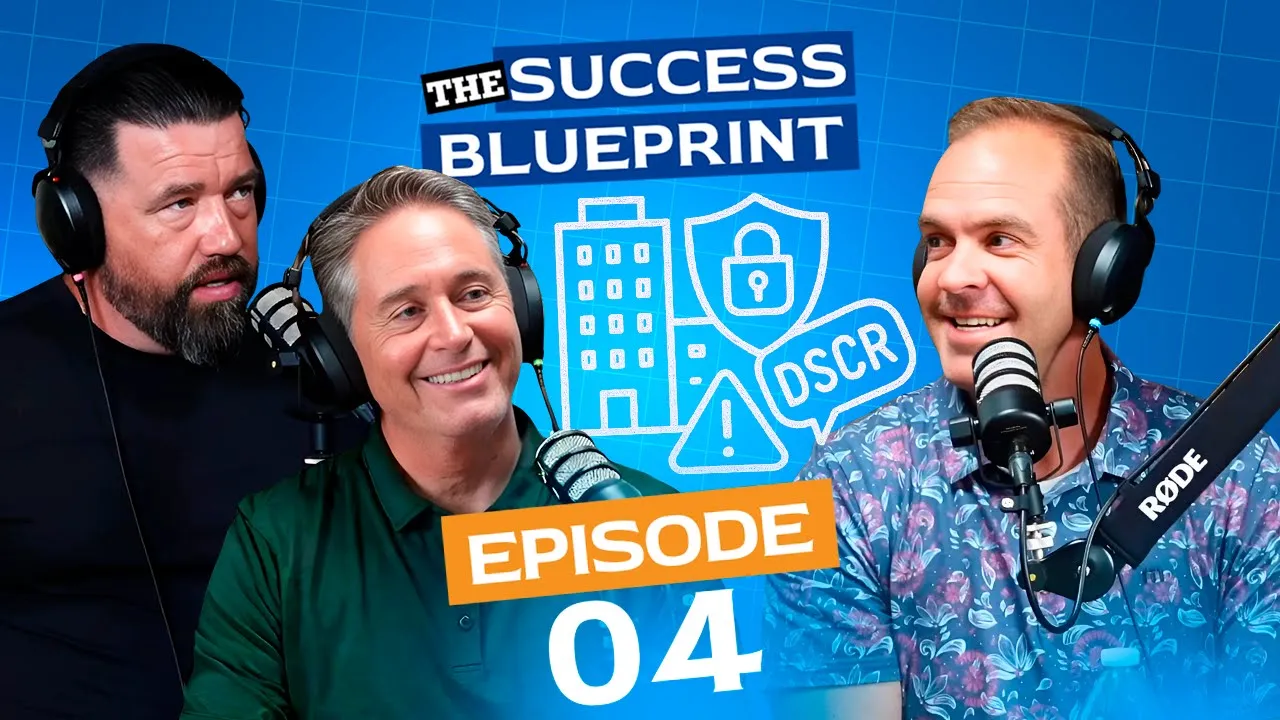
Helping First-Time Homebuyers & Building Wealth in East Idaho: Derek Oswald of My Style Mortgage | Ep. 04 — The Success Blueprint
What does it take to build a mortgage career from scratch during the worst housing crash in modern history — and come out the other side as one of East Idaho's most trusted lenders and a seasoned real estate investor? In Episode 4 of The Success Blueprint Podcast, Jason Grider and Morgan Peterson sit down with Derek Oswald of My Style Mortgage for a wide-ranging conversation about grit, financial education, and what it really takes to build lasting wealth in the Idaho Falls real estate market.
Derek's origin story is one of the most unconventional you'll hear. In 2009, with the housing market in freefall and his construction management degree losing its appeal, Derek started knocking doors across East Idaho and eventually California, Oregon, and Washington — showing up at strangers' homes with their mortgage deeds in hand, pitching FHA Streamline refinances to homeowners who were underwater and out of options. No mailers, no ads — just showing up at the door. It worked. Within the first week his brother's nearly-shuttered mortgage company had more business than it could handle, and Derek had found his industry.
What followed was sixteen years of building — from refinances to purchase loans, from single-family investment properties to commercial development, from grinding out the next deal to survive, to closing a hotel syndication in Ephraim, Utah. Along the way Derek learned the hard lessons that come with building any real business: when to pull the trigger on an investment, when to pass, the difference between being rich and being wealthy, and why the mortgage industry is a means to an end rather than the destination itself.
This episode is also a practical resource for anyone in East Idaho thinking about buying a home. Derek breaks down the biggest myths holding first-time buyers back — including the persistent belief that you need 20% down — and explains why the very first step for anyone curious about homeownership is a free, no-impact soft credit check that won't ding your score. He covers down payment assistance programs, USDA and rural development loan options, DSCR loans for investors, and why talking to a lender before you think you're ready is exactly the right move. If you're thinking about buying in East Idaho, this episode will tell you where to start.
Derek also gets candid about the financial habits he wishes he'd built sooner — including getting his kids started on credit early, the difference between rich and wealthy, and why a shocking number of people in their forties have no savings, no retirement, and no plan. For anyone building a career in real estate or lending, his advice is simple: the mortgage business will make you a good living, but it's what you do with that living that determines your future.
Topics covered in this episode:
- How Derek got started knocking doors during the 2008-2009 housing crash
- FHA Streamline refinances and how they saved underwater homeowners
- Building a mortgage career from the ground up in East Idaho
- Why so many first-time buyers don't think they can qualify — and why many of them actually can
- The myth of 20% down and other home loan misconceptions
- Soft credit checks: the free, no-risk first step every buyer should take
- Down payment assistance programs and low-down loan options in Idaho
- DSCR loans for real estate investors and how they work
- Real estate investing: are there still deals in East Idaho?
- The difference between being rich and building wealth
- AI and ChatGPT in the mortgage industry — helpful tool or dangerous shortcut?
- Teaching kids about credit, financial discipline, and building a foundation early
- What Derek would tell his younger self about investing sooner
Referenced or related resources:
- My Style Mortgage — Derek Oswald
- Idaho Housing & Finance Association — First-Time Homebuyer Programs
- USDA Rural Development Loan Program
- FHA Loan Programs — HUD
- Dave Ramsey — Personal Finance Basics
- Investopedia — DSCR Loans Explained
- Grider & Peterson Financing Page
- Buying in East Idaho
- Search Homes in Idaho Falls
- The Success Blueprint Podcast — All Episodes
Transcript
Morgan: Welcome back to The Success Blueprint. I'm Morgan Peterson. I'm here with my business partner Jason Grider and our guest today, Derek Oswald with My Style Mortgage. Derek, thanks for coming on. Let's get into it — what got you into mortgages? Where did it all start?
Derek: So it was back in 2009. I was up at BYU-Idaho studying construction management, and all my buddies who were a semester or two ahead of me were graduating and not finding jobs. I started questioning whether that was really the direction I wanted to go. At the same time, my brother had his own mortgage brokerage over in the Meridian area — they'd started it a year or so before that, which wasn't great timing given what happened in 2007 and 2008. They were actually about to close their doors.
What saved them was pivoting to refinances. There were a lot of people who had purchased homes in the last few years who were now underwater. There was a loan program called the FHA Streamline — it's still around today — where you could refinance an existing FHA loan with no appraisal and no income qualification. At that time, people were struggling with income and most didn't have equity, so a normal refi wasn't an option. The FHA Streamline was a lifeline.
Jason: What was the benefit for the homeowner?
Derek: Lower interest rate, skip two months of payments, and all closing costs were covered. People were like, "I skip two payments and it doesn't cost me anything?" In that environment, it was an easy yes. My brother's team went to the title company, pulled a list of homeowners with FHA loans, and started knocking doors. Within the first week they had piles of business. He called me and said, "We're onto something, but we need people out knocking doors to drum up leads." I was still in school, had lightened my course load since construction management wasn't the path anymore, so I jumped in.
Morgan: So you were literally door knocking with the deed in hand.
Derek: Exactly. They'd send me a list — all targeted, so I knew it was an FHA loan, had a pretty good idea of the interest rate and balance, and knew they were making payments so they'd qualify. I'd roll up to the door and say, "Hey Jason, how's it going, I'm Derek," and they'd look at me like, how do you know my name and what's on that paper? But as soon as I said I was with a mortgage company, people were like, they'd never had a mortgage guy knock on their door before. The pitch was easy because it was something they genuinely needed.
Jason: That's your version of summer sales.
Derek: Exactly — but a lot easier because the reception was almost always good. We eventually got licensed in California, Washington, and Oregon and started making road trips once a month. Five or six of us, lists prepped, routes mapped out. We'd go out for three or four days and knock evenings, then work the numbers and follow up during the day. In California the loan amounts were wild to us — here in Idaho a $300,000 loan was exceptional back then, and in California every loan was $300,000. We got paid on loan amount, so we were thrilled.
Morgan: It's funny — back then $300,000 was the ceiling here. Now it's hard to find a house under $300,000.
Derek: Completely different world. I remember rolling up to a $300,000 house in California expecting something impressive and it was a dive. I couldn't believe it. Never would have guessed Idaho would get to where it is now. But at the time I wasn't thinking about appreciation or investing — I was just grinding, trying to find the next deal to feed my family.
The first three years of my career I never even did a purchase loan. It was all refinances. The nice thing about learning on refis is the stakes are lower. If I made a mistake, the worst case was someone just kept their existing loan. That runway helped me work out a lot of the kinks. I'm the type of person who has to make a mistake to really learn a lesson, and I don't know that I could have survived the industry if I'd started on purchase transactions.
Jason: So when did you start thinking of it as an actual business versus just finding the next deal?
Derek: It took a few years honestly. For a long time it was just next deal, next deal. It wasn't until quite a bit later that I shifted into building a real business, getting the right team members in place to cover what I'm not good at, and finding the parts of the work I actually enjoy. For me that's the client relationship side — getting to know people, helping them figure out what's possible. There are so many people who don't think they can qualify for a loan and actually can. I'd estimate out of ten people who say they don't think they qualify, two or three of them actually could. That moment when you tell someone they're good to go — that's genuinely exciting to me.
Jason: Is that a knowledge gap or are there more programs available now than there used to be?
Derek: Both. Lending guidelines have softened in certain areas — more down payment assistance programs, lower credit score thresholds. But there's still a huge knowledge gap. The biggest myth we deal with constantly is that you need 20% down to buy a house. These first-time buyers are already stretching to qualify, they don't have a hundred grand sitting around, and they think that's what's required. It's not. There are USDA rural development loans that are 100% financing, multiple down payment assistance programs, and first-time homebuyer programs through Idaho Housing that get people in with little to nothing down.
Morgan: We were just talking about this — ChatGPT is making it even more complicated. We had a client recently who kept pushing back on everything we told them because "that's not what ChatGPT says."
Derek: It's becoming a thing. The problem is it's right enough of the time that people trust it completely. We had someone trying to float their interest rate because ChatGPT was telling them rates were coming down. They weren't. The information tends to be national and general, not local and specific to your situation. I've tested it myself — thrown in Idaho Housing bond program questions and it actually knows the guidelines reasonably well. But when it's wrong and someone's already decided to trust it, that's when it creates problems.
Jason: It's going to change the landscape of every industry. You won't have to remember anything — you'll just ask.
Derek: And there's going to be good in that and bad in it. The mortgage space specifically has a lot of gray area in the guidelines. There will always need to be a human in the loop because so much of it isn't black and white. But it'll definitely speed things up and look different in the future. The key is staying ahead of it rather than letting it catch up to you.
Jason: Let's talk first-time homebuyers practically. If one of our kids came to you tomorrow wanting to buy their first home, where do you start?
Derek: First thing — go get pre-qualified. And I don't mean a full hard credit pull. We can now do a soft pre-qualification that doesn't show up on your credit at all, doesn't ding your score, and costs nothing. It gives you a baseline — here's where you are, here's what you'd qualify for, here's what you need to work on. So many first-time buyers have no idea where they stand and they're afraid to even ask. The soft check removes that barrier entirely.
A lot of times we're building a roadmap with someone — you're right here, you don't quite qualify yet, but here's what you need to do and here's the timeline to get there. Like any map, you have to know where you are before you can figure out where you're going. We see people all the time who say, "I'm not ready yet, I don't want to talk to a lender." That's exactly backwards — the reason to talk to a lender now is so you're ready when the right house or the right rate shows up. If you're not prepared, you'll miss it.
Morgan: And on the down payment side — what should buyers actually expect?
Derek: It has changed significantly. The landscape now offers a lot more options. USDA rural development loans can be zero down depending on location. There are multiple down payment assistance programs for first-time buyers across Idaho, and many get people in for very little out of pocket. The key is that these programs exist and most buyers don't know about them. Our financing page is a good starting point, and then a conversation with Derek directly at My Style Mortgage will get you the specific options for your situation.
Morgan: So let's shift to investing. We've got mutual friends saying the market is saturated, there are no deals. What are you seeing?
Derek: I think there are still deals, but you have to change how you define a deal. I fall into this trap myself — I'll see a property that cash flows and still feel like I'm not winning enough on the buy side, so I pass on it and someone else picks it up. The mental shift is looking at the future, not just whether it feels like a deal right now. I've personally missed out on quite a few investment properties because I was too focused on the purchase price rather than what the asset would be worth in five years.
Jason: We had a conversation recently about how if we'd known what was coming when rates were in the twos and threes, we would have leveraged everything we had.
Derek: Everyone would have. But that's the thing — you look back five years later on almost any property and it was a deal. We're probably going to say the same thing in five years about right now. The discipline is pulling the trigger when the cash flow works even if it doesn't feel like a steal.
Jason: Talk about the DSCR loan — that's been a popular topic for investors lately.
Derek: DSCR — Debt Service Coverage Ratio — is probably the hottest product in the investment lending space right now. The big advantage is it's no income verification. You don't provide tax returns, employment history, none of it. In fact, we had a client recently where we listed their employment on the application out of habit and the lender made us start over — they don't even want to see income. The loan is based purely on the property. Does the rent cover the debt service? If yes, it works.
It's actually a pretty smart safeguard as an investor because as part of the appraisal process they do a market rent analysis. An independent appraiser tells you what the market rent should be, and appraisers tend to be conservative. If the cash flow still works at their conservative rent estimate, you're in a solid spot. You get an extra set of eyes on the numbers before you commit.
The other big advantage is it removes all the documentation headache of conventional investment loans. If you've got a big portfolio, pulling together income verification, asset statements, and documentation on every property you own is a massive undertaking. DSCR sidesteps all of that.
Morgan: Has your own investment strategy changed over the years?
Derek: A lot. The first four or five years I was buying single-family residential. I've since moved more into commercial. We actually have a hotel in Ephraim, Utah that we developed as a syndication — multiple investors involved. We bought twelve acres, developed it, sold off a couple of parcels to tenants like Costa Vida and Burger King who are now building out there. It's been a completely different experience from residential but a lot of fun.
Looking back, my biggest regret is not jumping into investing sooner. I was nervous, I didn't know enough, and I stayed in the daily grind of work longer than I should have before I started building assets. My advice to anyone starting out — whether in mortgage or real estate — is to start investing earlier than feels comfortable.
Jason: You talk about the difference between being rich and being wealthy. That's something I hammer on too.
Derek: It matters more than most people realize. The mortgage business will make you good money. Real estate will make you good money. But it's what you do with that money that determines your future. Being rich is income — you can flash it, spend it, look the part. Wealth is assets that work for you when you're not working. I see people my age in their forties with no savings, no retirement accounts, nothing — and it's terrifying. We ran a first-time homebuyer seminar in Idaho and looked at who signed up — the majority were over fifty years old. That's a scary spot to be in, starting from scratch at that stage.
It comes down to discipline. Society tells you to buy the new truck, get the new toys, live on the monthly payment. If you can make the payment, you're fine. But that's not building anything.
Jason: That's what I try to teach my kids — you'll look around and think someone's rich because of what they have. Most of the time they're maxed out.
Derek: Same conversation at our house constantly. And it's why I've had my oldest son — he's eighteen, he's on a mission right now — set up as an authorized user on my credit card so he's building credit while he's gone. He'll come home and be able to jump straight into the investing game instead of spending a year just trying to establish credit. High schools should be teaching this. I know there's been some curriculum developed around it, but it needs to be front and center. Credit, how to build it, how to manage it — that's real life for every single one of our kids.
Jason: Last question — what's your advice to someone just getting into mortgage who wants to build toward what you've built?
Derek: Two things. First, start investing sooner than you think you should. Don't wait until you feel ready, because you'll keep waiting. Second, think about the mortgage business as a means to an end, not the destination. It provides a great lifestyle and it puts you in a position to invest in other things. Use it that way. I made some dumb purchases and dumb investments along the way — some of them were fun, none of them built anything — and if I could go back I'd put more of that income into hard assets earlier. Real estate. The boring stuff that compounds over time.
And honestly — just work. Every successful person I know in this industry worked hard to get there. It doesn't come to you. But if you show up, do the work, build the right team around you, and invest what you earn rather than spend it — you'll get there. For anyone ready to take the first step toward buying in East Idaho, start with a soft credit check at My Style Mortgage or connect with our team and we'll help you figure out where you stand.
Morgan: Derek, thanks for coming on. We'll have you back when rates hit three and a half percent.
Derek: I'll be there. That might be a while though.
Transcript
Q: What is a soft credit check and should first-time homebuyers get one before talking to a lender? A soft credit check — also called a soft pre-qualification — is a preliminary review of your credit that gives you a clear picture of where you stand without affecting your credit score at all. It costs nothing and takes very little time. Derek Oswald of My Style Mortgage recommends it as the very first step for any first-time buyer who isn't sure if they qualify, because it removes the guesswork and helps build a clear roadmap to homeownership. Many buyers wait until they feel "ready" before talking to a lender — but the soft check is precisely what tells you what you need to do to get ready. You can also explore financing options on the Grider & Peterson Financing page or connect with the team directly to get pointed in the right direction.
Q: Do you really need 20% down to buy a home in Idaho? No — this is one of the most persistent and damaging myths in real estate, and it stops a lot of qualified buyers from even starting the conversation. There are multiple low- and no-down-payment options available to buyers in East Idaho, including USDA Rural Development loans that offer 100% financing in eligible areas, Idaho Housing first-time homebuyer programs, and various down payment assistance programs that can dramatically reduce or eliminate the upfront cash needed. The landscape for first-time buyers has expanded significantly. The best way to find out exactly what you qualify for is to start with a no-cost soft credit check through a lender like My Style Mortgage or to reach out to the Grider & Peterson team for a referral.
Q: What is a DSCR loan and is it a good option for real estate investors in East Idaho? A DSCR loan — Debt Service Coverage Ratio loan — is a mortgage product designed specifically for investment properties that qualifies the borrower based on the property's rental income rather than personal income or employment history. There's no requirement to provide tax returns, W-2s, or pay stubs. The lender simply evaluates whether the expected rent covers the loan payment. As part of the process, an appraiser performs a market rent analysis, which gives investors an independent data point on what the property should rent for. Derek Oswald of My Style Mortgage describes it as one of the most useful tools currently available for investors looking to grow a portfolio without the documentation burden of conventional investment loans. To learn more about buying investment property in East Idaho or to explore financing options, the Grider & Peterson team can connect you with the right resources.
Q: Is it still worth investing in East Idaho real estate right now? According to Derek Oswald, yes — but the mindset shift matters. The tendency is to wait for a purchase that "feels like a deal" in the moment, but many investors who waited for that feeling passed on properties that appreciated significantly within just a few years. His view is that if a property cash flows today and the numbers work, it's worth taking seriously — because looking back five years from now, most properties bought today will look like good decisions. The Idaho Falls real estate market has matured, but appreciation, rental demand, and available financing tools like DSCR loans still make it a viable and active market for investors. You can search available properties or connect with the Grider & Peterson team to talk through investment opportunities in East Idaho.

Grider & Peterson Real Estate Team
Lead Agent | Grider & Peterson Team - EXP Realty LLC
or another way