


Published April 20, 2026
Episode 03 — From Stay-at-Home Mom to East Idaho Real Estate Leader: Jamie Baker

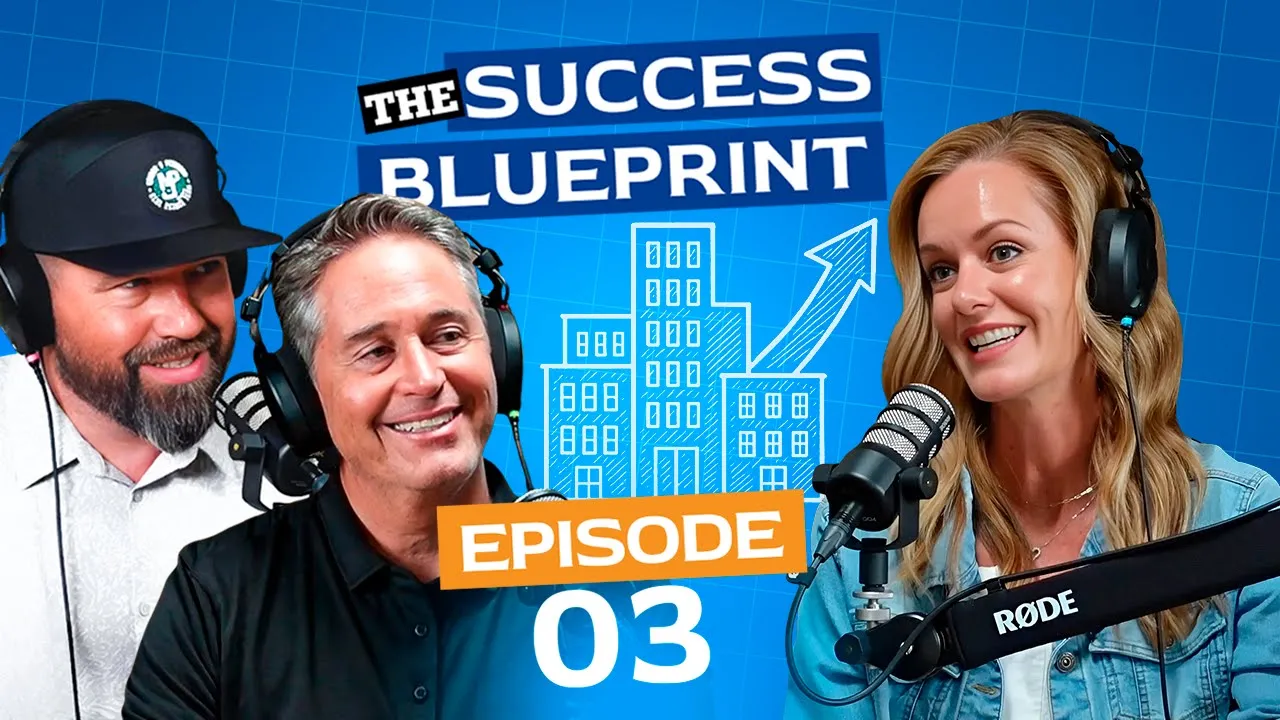
From Stay-at-Home Mom to Top East Idaho Agent: Jamie Baker's Story | Ep. 03 — The Success Blueprint
What does it look like to walk away from fifteen years of raising kids, step into a career you never planned for, and quietly become one of the top agents in the Idaho Falls real estate market? In Episode 3 of The Success Blueprint Podcast, Jason Grider and Morgan Peterson sit down with their teammate Jamie Baker for a conversation that is equal parts inspiring and practical — and completely honest.
Jamie didn't come from a sales background. In fact, she'll be the first to tell you she hates sales. What she had instead was fifteen years of managing rental properties, raising two boys, running a household, and watching her husband grind through sixty-hour weeks at a diesel mechanic shop he no longer loved. Real estate wasn't her dream. It was a calculated decision — one she thought she'd do part-time — that turned into something she couldn't have predicted.
Her path started with keeping their first home as a rental in 2008, right as the market cratered, on the advice of a friend who understood real estate investing. That decision — uncomfortable, scary, and financially risky at the time — ended up being one of the smartest moves she and her husband Nick ever made. It gave her a front-row seat to how real estate investment worked, which eventually led to a marketing internship with a local real estate team, which led to getting licensed, which led to everything else.
After about a year on her first team learning the basics, Jamie realized the fit wasn't right. The team was good — she learned a lot there — but family came first in her life and it didn't in theirs. She wanted to be valued as a person, not just a paycheck. So she called Morgan Peterson out of the blue after seeing a vague Facebook post about Grider & Peterson looking for buyer's agents. She left a voicemail. He called back. The rest landed her in the top 2-3% of agents in East Idaho.
This episode goes well beyond the career arc. Jamie talks about the goal she wrote down on a piece of paper on her very first day in real estate and found years later — already accomplished. She talks about what it meant to earn enough that her husband could finally walk away from work that was wearing him down and start Sage Construction & Concrete, building their dream home by hand and eventually bringing their own boys to work with him every day. She talks about the text Morgan sent her at the end of her first week asking how she was doing — not her stats — and why that question completely broke her brain.
She also delivers some of the most direct, no-excuses advice you'll hear on the show: show up to the office, treat real estate like a nine-to-five, never miss a chance to learn, and stop waiting for someone else to make you successful. For agents considering a change, for buyers and sellers trying to understand who they're working with, or for anyone trying to build a life that actually matches their values — this episode is worth every minute.
Topics covered in this episode:
- Keeping a rental property through the 2008 crash and what it taught her about real estate investing
- Going from stay-at-home mom to licensed agent — and realizing it's not a part-time job
- What to look for when choosing a real estate team — and the questions you should be asking them
- Finding Grider & Peterson through a Facebook post and what the first weeks felt like
- Writing down five goals on day one of her career and finding them already achieved years later
- How her real estate income gave her husband the freedom to leave his business and start something new
- Why showing up to the office is one of the most underrated success habits in real estate
- Self-accountability, bouncing back from mistakes, and the no-excuses mindset she grew up with on a farm
- What it means to be top 2-3% of agents in the East Idaho market
- Team trips to Costa Rica and why real estate success isn't just a paycheck
Referenced or related resources:
- National Association of Realtors (NAR) — Agent Statistics
- Real Estate Investing Basics
- Keller Williams Realty
- eXp Realty
- The Success Blueprint Podcast — All Episodes
- Search Homes in Idaho Falls
- Buying in East Idaho
- Join the Grider & Peterson Team
Transcript
Jason: Welcome to The Success Blueprint. I'm Jason Grider. We're here with Morgan Peterson and Jamie Baker. We're excited to talk to Jamie today about what's made her successful. Jamie, thanks for being here.
Jamie: Thanks for having me, you guys. Excited to be here.
Jason: Let's start with a quick overview of your real estate career — highlight level.
Jamie: So I actually got started in real estate before I got started in real estate, if that makes sense. About fifteen years ago, my husband and I kept our first home as a rental property. I managed that property, we saw the benefits of it, and kept adding investment properties from there. I was already spending a lot of time researching properties and learning the market, so getting my license eventually felt like a natural next step.
Jason: What were you doing before real estate?
Jamie: For fifteen years I was a stay-at-home mom raising two boys — that was my world. I also managed our rental properties during that time. Before the kids came along, I managed a pediatric speech clinic, and before that I worked at a local car dealership managing their new vehicle inventory.
Jason: Any sales experience in there?
Jamie: None. And honestly, that's still kind of my thing. When people say, "Oh, you're in sales," I cringe a little. I'm not here to sell you something. I'm here to help you through the process. Don't call me a salesperson.
Morgan: So going back — why did you keep that first rental in 2008? Most people's instinct is to sell.
Jamie: That was actually the plan. We had it on the market right as the market was cratering — perfect timing, obviously. It sat for about six months and wouldn't sell. We had a friend nearby who was heavily invested in real estate and always trying to nudge us in that direction. At that point my husband had just started his own business — only about three years in — and our youngest was basically a newborn. It felt like a lot of risk. But a friend with real investment experience sat down with us, walked us through it, and we decided to hold on and use the down market to get into our next home for a steal. It was scary. But it worked out.
We'd also lived in that first house for eight years, so we had real equity in it. The number it was worth the year before versus what it would sell for in that market — we just couldn't bring ourselves to take that loss. Holding it was the right call.
Jason: And eventually that experience led to getting licensed?
Jamie: It was a natural flow. I went back to school for business management and marketing, and one of my final classes was an entrepreneurship course that required an internship. I ended up interning with the marketing department of a local real estate team, helping with all their marketing. I already understood the market side from managing our properties, and now I was learning the marketing side on top of it. They kept telling me I should get licensed. So I thought — we're already buying and selling, why not jump in?
I genuinely thought I'd do it part-time. You don't know what you don't know. Real estate is not a part-time thing. If you're half in, half out, you're not really sure what's going on. Once I got into it and started seeing the potential, it took on a life of its own.
Jason: Was that a conversation with your family when it started becoming more than part-time?
Jamie: My kids were a little older by then — fourteen and eleven — so they were pretty self-sufficient. My husband Nick was more apprehensive, honestly. He didn't sign up to have me gone every night and every weekend. But he'd been building his business and I'd supported him through that, and he just decided he was going to support me back. He said, "Whatever you want to do, I'm behind you a hundred percent as long as it's making you happy." And of course, if I was working seventy hours a week and bringing home five dollars, that support would have worn thin pretty fast.
Jason: So you were on another team first. What made you start looking elsewhere?
Jamie: The team was good. I have no regrets about starting there — I learned what to do, what not to do, what I liked, what I didn't. It took about a year to really find my footing. But after that year I realized the fit just wasn't there for me anymore. I was still a mom and that was always going to be my number one priority. On that team, it was team first, everything else second. That's a valid way to operate — it just wasn't a life I could live. I needed to be somewhere that valued me as a person, not just as a number.
Jason: How did you find Grider & Peterson?
Jamie: Morgan had posted something on Facebook — pretty vague, just outlining that they were looking for buyer's agents and what kind of person they were looking for. I'd talked to other teams and interviewed elsewhere and nothing quite clicked. Not that those teams were bad, just not what I was looking for. So I just called Morgan out of the blue. Didn't know him from anyone. Left a message, said who I was, where I was working, and what I was looking for. He called back, we talked briefly, made a plan to meet at the office. The rest is history.
Morgan: And when she came in, it was interesting. You have people who walk in and tell you everything they're going to conquer. And then you have people who just sit down and have a real conversation. Jamie was the latter. She was casual, genuine, we talked about goals in a pretty low-key way. I actually wondered afterward how serious she was about diving in. And then she came in and did everything she said she would — and more.
Jason: Did you ever imagine you'd do as well as you have?
Jamie: No. Not even close. I actually remember when I was leaving that first team and packing up my desk. On a random piece of paper I found — shoved in somewhere — were five goals I'd written down on my very first day in real estate. I had completely forgotten about it. When I read it, I realized I had actually hit every single one of them. They weren't wild goals — one was a stretch, but most were just realistic, family-focused things. I had a number in mind that I knew would justify being away from home. If I couldn't hit that number, it wasn't worth it to me.
I hit that number on the first team and was content. When I moved over here, that number doubled. That's how I knew the move was right. I had a team behind me that believed in me, let me do my thing, and was always in my corner.
Jason: Where does that drive come from? You've always had it?
Jamie: I grew up on a farm. When you're a farm kid, you work and your pay is basically room and board. Congratulations, here's your lunch. So work itself has never been something that bothered me — it's just how it was. I've had a job since I was old enough to have one. I've always just needed to accomplish the things in front of me. I can't lean on somebody else to do it. Put your head down, get it done. No excuses. Excuses drive me absolutely crazy.
Jason: Does that self-accountability piece — not making excuses, owning your outcomes — is that something you think you were always wired for?
Jamie: Pretty much, yeah. I have lazy days. I'm easily distracted, I'll talk your ear off if you let me. But when work needs to get done, it gets done. And in real estate, there's so much you can't control — markets shift, deals fall apart, things slide through the cracks. You're only on one side of every transaction. The only thing you can control is yourself. If something goes wrong, you can look outward and blame the universe, or you can ask what you could have done differently. The latter is always more useful.
Jason: What did those first three to six months look like after joining our team?
Jamie: Honestly, the move was easier than I expected. You just move your license over and learn how a different team handles things. After your first or second transaction, you figure it out. Real estate processes are pretty consistent — it's not like learning a new industry. And everyone was so available. I could walk into Jason's office anytime and ask a question. His door was always open. That was new for me. At the previous team the door was closed pretty often and you were kind of on your own to figure things out.
One thing I do remember very specifically from my first week: Morgan sent me a text asking how my week was going. And I — completely conditioned from a team where numbers were everything — sent back my stats. Calls made, contacts, the whole list.
Morgan: I got back this full spreadsheet of activity.
Jamie: And he said, "Cool story, bro. But how was your week?" And I had no idea how to answer that. I called a friend and was like, "The weirdest thing just happened. This guy asked how I was doing and didn't care about my numbers." She said, "Wait, what?" I still didn't quite know what to do with it. I went home and my husband asked what Morgan wanted to know, and I was like — I think my feelings? Still not entirely sure.
Morgan: I just never want people to think we only see them as a transaction. When someone makes a change that involves their finances and their family, that's scary. I just wanted to know if you were okay.
Jason: What has this career done for you and your family beyond the income?
Jamie: The income part was meaningful, but the bigger thing is what it gave Nick the freedom to do. He owned a diesel mechanic shop and had run it for fifteen years. Hard work, physical work, sixty to seventy hours a week. He was burned out. He'd come home and try to put on a happy face, but you could feel it. He grew up on a farm going to work with his dad, and one of his quiet regrets was that he couldn't share that with our boys — taking them to work with him, teaching them with his hands. He was just always there keeping things running, and it was wearing him down.
One of my written goals from that very first piece of paper was to give him the option. Not to make him quit — just to give him the choice. After about a year I could offer that, and when I moved here and my income grew, he really felt comfortable making the move.
He started Sage Construction & Concrete. He took a year and built our home by hand — and it's beautiful, because he's wildly type A about everything being done right. Then he started the concrete side of the business, and now both our boys work with him. My oldest is learning how to bid jobs and call vendors. I love watching the three of them work together. He got the business he wanted, the life he wanted, and our boys got the dad at work thing he never had with his boys. That picture of him on his last day at the shop — two thumbs up, biggest smile — I was proud of him and honestly pretty proud of myself too. That was a first for me.
Jason: What's the hardest lesson you've had to learn in real estate?
Jamie: That it is truly up to you. You can join an incredible team. You can have all the leads handed to you. You can have someone walk you through every transaction. But if you're not willing to just do the work, you will not be successful. There's no formula. There's no magic bullet. You just have to do it. And I think that's a pride thing for a lot of people — accepting that the results in front of you are a direct reflection of the effort you put in.
Teams can't make you successful. They can give you every tool, every system, every resource. Ultimately, you're the one who has to show up and do the work every single day.
Morgan: That's something I always ask when we bring someone new on — are you self-motivated? Can you hold yourself accountable? Because accountability doesn't mean you're perfect every day. Sometimes it's just honestly looking at a rough week and asking what you can do differently tomorrow. Jamie has never once pointed the finger outward. It's always been what can I control, what can I fix.
My dad used to drive me to school and we'd say, "If it's to be, it's up to me." I still try to get my kids to do it and they're having none of it.
Jamie: You were a weird kid and your kids are normal, it's fine.
Jason: What do you think has actually set you apart as an agent? You're in the top two to three percent by any measure.
Jamie: I treat this like a nine-to-five job. Office hours nine to five — that was non-negotiable for me. I rarely missed a morning meeting unless I had showings or a family commitment. A lot of agents do the morning meeting and disappear by noon. I stayed. And then I'd make calls in the evenings when needed. I was here. Consistently. Every day.
I also made a promise when I joined this team. You guys were supporting me. I needed to support you back. If I wasn't living up to what I expected of myself, how could I expect anything from you? It's mutual respect. And I have genuinely never felt as valued in a job as I feel here.
Morgan: She was always in the office. When she wasn't, we never questioned it — we knew she was out doing something productive. That trust is earned, and she earned it immediately.
Jason: There's a real correlation on our team between the agents who are in the office the most and the ones who close the most deals.
Jamie: Absolutely. People think working from home is efficient, but here's the thing about my house — all my stuff is there. The TV's there. My snacks are there. My house is spotless when I'm supposed to be working from home because if something hard comes up, suddenly cleaning the bathrooms sounds great.
When you're in the office, even when nothing's obviously happening, you're learning. You overhear someone working through a tough deal. You jump in to help another agent and end up teaching yourself something in the process. I love when agents come to me with questions. We work through it together, combine approaches, and come out with something better than either of us had alone. And I can't tell you how many times I was the only agent in the office at 4:45 and someone walked in or called needing help. Be there. Just be there.
Jason: What's been the most fun part?
Jamie: The Costa Rica trips, easily. We still work a little — I bring my laptop, I get things done — but it's us in a much better location. And you get to see people differently. Seeing Jason and Morgan with their wives, the way they treat them and talk about them — that's actually one of the things that makes me respect them even more as people. I've known a lot of successful business people who are completely different at home. That's not these two. Knowing that just makes the working relationship better. We've really become genuine friends, not just coworkers.
Jason: And that, I think, is the whole point of this show. Success isn't just a paycheck. It's family, it's relationships, it's everything across all the boards at once.
Jamie: Completely. The beautiful home and the income — that's background noise. The three other people who live in my house are what matter. Everything else just supports that. I'm grateful every day to be in a career that gives me the flexibility to be present for them.
Jason: Well Jamie, thank you. Not just for being a great agent and an example to the team, but for being a genuine friend. That matters more than any of the rest of it.
Jamie: Right back at you, both of you. Truly. You make it easy.
Frequently Asked Questions
Q: Who is Jamie Baker and what is her background in real estate? Jamie Baker is one of the top-producing agents on the Grider & Peterson Real Estate team in Idaho Falls, Idaho, consistently ranking in the top 2-3% of agents in the East Idaho market. Before real estate, Jamie spent fifteen years as a stay-at-home mom while managing a growing portfolio of rental properties alongside her husband. Her path into real estate grew organically from that investing experience, a marketing internship with a local team, and an entrepreneurship class that pushed her toward getting licensed. She joined Grider & Peterson after seeing a Facebook post about open positions, called Morgan Peterson cold, and went on to build one of the most consistent track records on the team. You can learn more about buying or selling with Jamie and the full team at griderpeterson.com.
Q: How did Jamie Baker's real estate career change her family's life? One of Jamie's original written goals when she first got her license was to earn enough that her husband Nick — who had run a diesel mechanic shop for fifteen years and was deeply burned out — would have the financial freedom to walk away and pursue something he was genuinely passionate about. Within her first year on the Grider & Peterson team, after her income roughly doubled from her previous team, that became a reality. Nick started Sage Construction & Concrete, built their family home by hand, and now runs the business alongside both of their sons. For Jamie, that outcome — her husband doing work he loves, their boys working with their dad every day — was more meaningful than any production milestone. Hear the full story in Episode 03 of The Success Blueprint Podcast.
Q: What advice does Jamie Baker give to agents choosing a real estate team? Jamie's advice is straightforward: write down your goals first, then find a team built to help you hit those specific goals — because not every team is the right fit for every agent. In every interview process, every team will tell you they're the best, and in some way they probably are. Your job is to figure out whether their particular strengths actually line up with what you need. Ask about their expectations of you upfront — unreachable expectations will leave you feeling like you're failing every single week. Ask what they offer beyond leads, because leads are just the baseline. And remember you're interviewing them just as much as they're interviewing you. If you're exploring options in East Idaho, you can learn more about what the Grider & Peterson team offers on the Join Our Team page, or connect with the team directly.
Q: What does Jamie Baker say is the biggest key to success as a real estate agent? Jamie points to two things above everything else: treating real estate like a real job with real office hours, and taking complete personal accountability for your results. She kept a consistent nine-to-five presence in the office throughout her career, rarely missed a morning meeting, and made calls in the evenings when needed. Her view is that there's a direct, visible correlation between agents who are consistently in the office and the agents who close the most deals — because showing up creates opportunity even when nothing obvious is happening. On accountability, she's equally direct: no team, no lead source, and no system can make you successful if you're not willing to do the daily work. Real estate is simple, she says — just not easy. For more on the Grider & Peterson culture and what it looks like to build a career here, visit the blog or listen to all episodes at griderpeterson.com/the-success-blueprint-podcast.

Grider & Peterson Real Estate Team
Lead Agent | Grider & Peterson Team - EXP Realty LLC
or another way